This report summarises a NASA release published on November 25, 2026. The release is headed: NASA’s Hubble Views Ocean of Stars in Groundwork for Roman. What follows is a condensed account drawn only from that release, with no additional claims added. Explore Hubble Hubble Home Overview About Hubble The History of Hubble Hubble Timeline Why Have a Telescope in Space? Hubble by the Numbers At the Museum FAQs Impact & Benefits Hubble’s Impact & Benefits Science Impacts Cultural Impact Technology Benefits Impact on Human Spaceflight Astro Community Impacts Science Hubble Science Science Themes Science Highlights Science Behind Discoveries Universe Uncovered Hubble’s Partners in Science Hubble & Citizen Science SI & Hubble Science Explore the Night Sky Observatory Hubble Observatory Hubble Design Mission Operations Science Operations Astronaut Missions to Hubble Hubble vs.
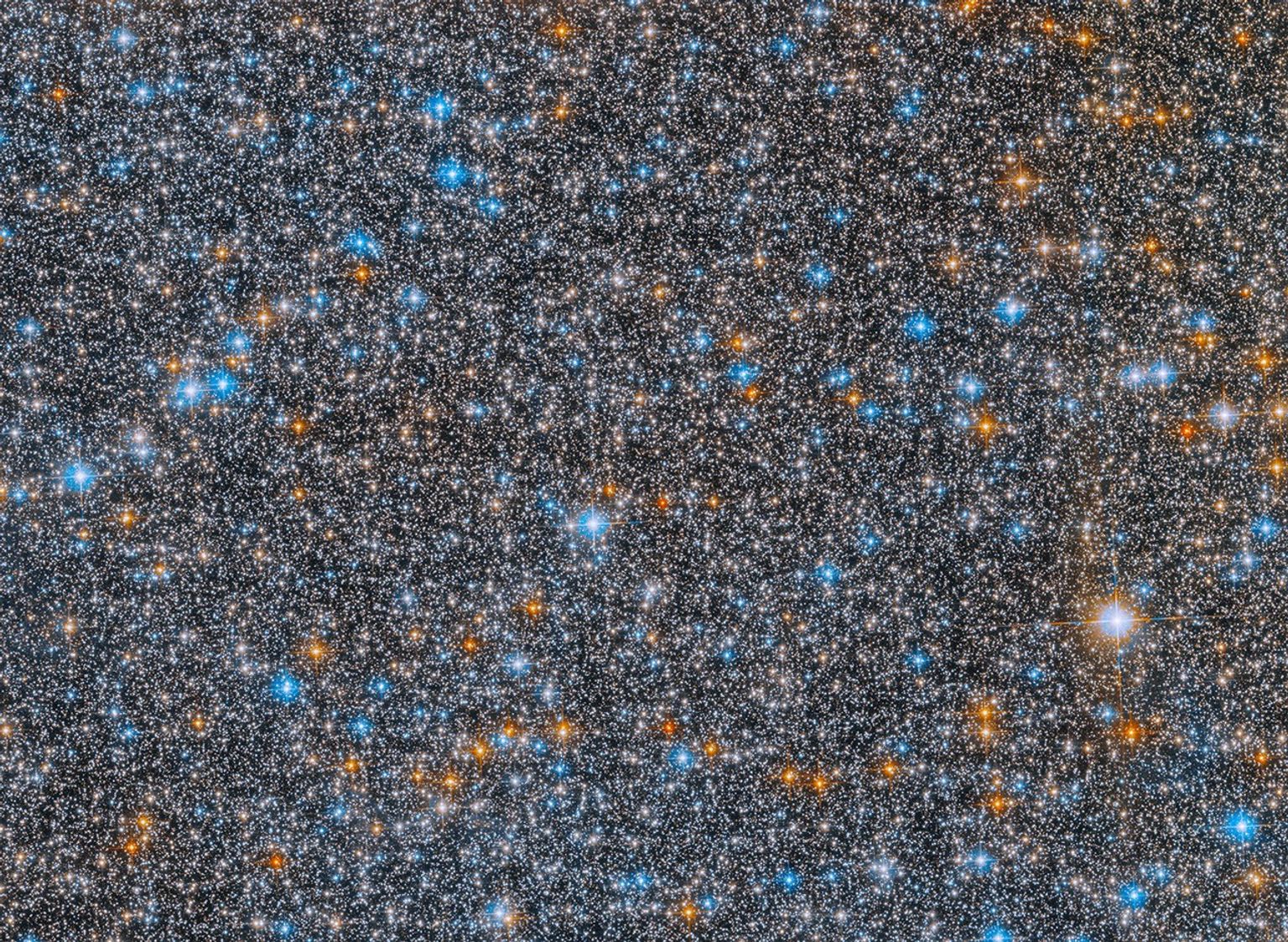
Roman Team Hubble Team Career Aspirations Hubble Astronauts Multimedia Images Videos Online Activities e-Books Sonifications Podcasts 3D Hubble Models Lithographs Fact Sheets Posters Hubble on the NASA App Glossary News Hubble News Social Media Media Resources 35th Anniversary More Online Activities 3 Min Read NASA’s Hubble Views Ocean of Stars in Groundwork for Roman NASA’s Hubble Space Telescope’s high resolution reveals individual stars in an area near our galaxy’s center swarming with stars. Kober (NASA/Catholic University of America) An expanse of stars gleams in a rainbow of colors in these NASA Hubble Space Telescope images of the Milky Way. Teeming with stars in a rainbow of colors, this NASA Hubble Space Telescope image will help researchers interpret future Nancy Grace Roman Space Telescope data of the same region.
Kober (NASA/Catholic University of America) Hubble views the universe primarily in ultraviolet, visible, and near-infrared light, while Roman collects data in near-infrared light and some visible light. Facebook logo @NASAHubble @NASAHubble Instagram logo @NASAHubble Explore More: Hubble Survey Sets Up Roman’s Future Look Near Milky Way’s Center Roman’s Galactic Bulge Time-Domain Hubble Probes the Archeology of Our Milky Way’s Ancient Hub Hubble Uncovers Fading Cinders of Some of Our Galaxy’s Earliest Homesteaders Hubble Finds Extrasolar Planets Far Across Galaxy Hubble Finds Planet Orbiting Pair of Stars Video: Gravitational Microlensing Media Contact : Claire Andreoli NASA’s Goddard Space Flight Center , Greenbelt, MD claire.andreoli@nasa.gov Share Details Last Updated Nov 25, 2026 Editor Andrea Gianopoulos Location NASA Goddard Space Flight Center Related Terms Hubble Space Telescope Astrophysics Astrophysics Division Galaxies Goddard Space Flight Center Nancy Grace Roman Space Telescope The Milky Way The Universe Keep Exploring Discover More Topics From NASA Hubble Space Telescope Since its 1990 launch, the Hubble Space Telescope has changed our fundamental understanding of the universe. Roman NASA’s Hubble and Roman space telescopes will work together to broaden our perspective of the universe.